On 13 May 2026, members of the ENFP Network gathered online for a meeting largely dedicated to one topic already on everyone’s mind: the upcoming Periodic Reporting cycle. The meeting also provided a welcome opportunity to reconnect, share ongoing initiatives, and collectively look ahead to the 11th UNESCO General Assembly taking place in Paris this June.
As always, the discussion reflected one of the core strengths of the ENFP Network: creating a supportive and open space where focal points, facilitators and heritage professionals from across Europe can exchange experiences, concerns, ideas, and practical approaches in an informal but constructive atmosphere.
Updates and ongoing initiatives
The meeting opened with several updates from the Steering Committee and current ENFP initiatives.
- Ethics Initiative
Cristina Biasetto (FP – Austria) shared the latest developments from the Ethics Initiative. Work is currently underway on a publication bringing together the key reflections and recurring themes that emerged from the discussions organized over the past year. Reflections are continuing on how best to disseminate the publication and further develop conversations around ethical challenges in safeguarding.
- Inventorying Initiative
Participants also heard about the ENFP inventorying initiative developed together with . The survey has already received many responses and generated considerable interest among members. Beyond comparing inventorying practices across countries, several participants noted that this work could also become a valuable preparation tool for the future Periodic Reports.
- Communication
Communication and visibility within the network were also highlighted during the meeting. The communication team warmly encouraged members to continue sharing activities, publications, and initiatives through the ENFP Newsletter. The discussion underlined how important these communication tools have become for strengthening connections between colleagues and increasing the visibility of safeguarding work taking place across Europe.
Focus on Periodic Reporting
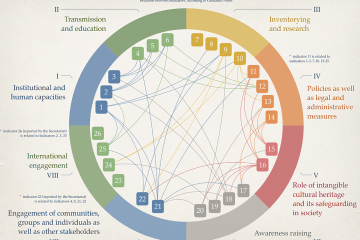
The largest part of the meeting focused on the future Periodic Reporting cycle and the outcomes of the UNESCO Global Reflection Meeting on Periodic Reporting Mechanisms held at the end of April.
Participants were also invited to reflect on the main developments currently under discussion at UNESCO, including the simplification of reporting forms and the evolving reporting framework, the move toward a globally synchronized reporting cycle, and the continued importance of the Overall Results Framework (ORF). Participants also received updates regarding the upcoming European training sessions that will take place in autumn 2026, while the submission deadline for the next reports remains set for 30 June 2027.
The discussion quickly became very practical and interactive. Many participants shared that preparations in their countries are gradually beginning, which led to a broader exchange on coordination, methodologies, and the different ways focal points are approaching the process. A live poll conducted during the meeting also highlighted a strong interest in training opportunities, peer learning, and continued exchange within the network.
One of the strongest messages emerging from the discussion was the importance of approaching Periodic Reporting not only as an administrative obligation, but also as a valuable opportunity for reflection, coordination, and policy development.
Sharing national experiences
Participants shared concrete experiences and methodologies for organizing the reporting process.
Drawing on the Norwegian experience, Hildegunn Bjørgen (FP-Norway / ENFP SC) explained how preparations are already beginning through the review of previous reports, existing research, and available cultural data. Hildegunn also emphasized the importance of involving civil society, universities, regional authorities, and other stakeholders early in the process.
Jorijn Neyrinck (Facilitator-Belgium / ENFP SC) presented Flanders-within-Belgium’s experience coordinating the reporting process within a federal context. The Flemish approach relied on thematic working groups, stakeholder roundtables, and coordination between cultural communities, while using the thematic areas of the ORF as a practical structure for organizing the work. Intra-belgian coordination concluded the compilation and integration of the sub-reports into one Belgian Periodic Report to UNESCO, while still reflecting the different cultural competences and situations within the country.
Throughout the exchange, several participants stressed how useful it would be to continue sharing questionnaires, templates, methodologies, and practical tools between countries rather than starting from scratch individually. Others highlighted the need to better connect reporting work under the 2003 Convention with related reporting obligations under the 2005 Convention.
Exchange with UNESCO representatives
UNESCO representatives joined the discussion and acknowledged the unique role played by the ENFP Network in supporting peer learning around these processes.
They confirmed that the simplification of the reporting forms is still ongoing, while reassuring participants that the Overall Results Framework will remain at the core of the reporting mechanism. The exchange also highlighted how valuable the ENFP Network has become in helping focal points navigate complex reporting processes, exchange practical experiences, and collectively identify common challenges.
Looking ahead to the UNESCO General Assembly
The second half of the meeting looked ahead to the upcoming UNESCO General Assembly in Paris.
Phil Foxwood (FP-United Kingdom / ENFP SC) introduced several themes expected to shape discussions during the Assembly, including:
- developments around Periodic Reporting;
- sustainable development;
- digital technologies and AI;
- sustainability of the listing mechanisms;
- the development of the (Article 18) online platform on safeguarding practices.
Participants also exchanged reflections on the increasing backlog of nomination files and challenges related to multinational nominations. The discussion around the Article 18 platform generated particular interest, with several members emphasizing its potential as a space for sharing safeguarding experiences and practices internationally.
Continuing peer learning within ENFP
The meeting concluded with a discussion on how the ENFP Network itself could continue supporting members throughout the coming reporting cycle.
Participants broadly supported the idea of regular peer-learning sessions and more informal exchange meetings where focal points could share questions, practical concerns, and experiences in a supportive environment. Different communication formats were also discussed, reflecting a shared desire to strengthen cooperation and maintain close exchanges between colleagues across the region.
The Steering Committee is currently reflecting on the different proposals and possible formats for these exchanges, and more information on future peer-learning activities and communication tools will be shared with the network in the coming months.
More than anything, the meeting once again highlighted the collaborative spirit of the network and the importance of maintaining spaces where colleagues can openly exchange experiences, uncertainties, practical advice, and ideas as the Convention continues to evolve.
Useful Links:
- UNESCO meeting on Periodic Reporting
- Eleven Session of the General Assembly
- Overall results framework for the 2003 Convention
Previous meetings:
Cover picture: © Ministry, of Culture and Sports
Moment in which the groups of barrileteros begin to raise the kites to be exhibited at the fair. It is the moment in which they see the culmination of more than three months of work creating the giant kite. Fairgoers watch and capture the moment. Link.